AI Engine Optimization: A Technical Review Checklist




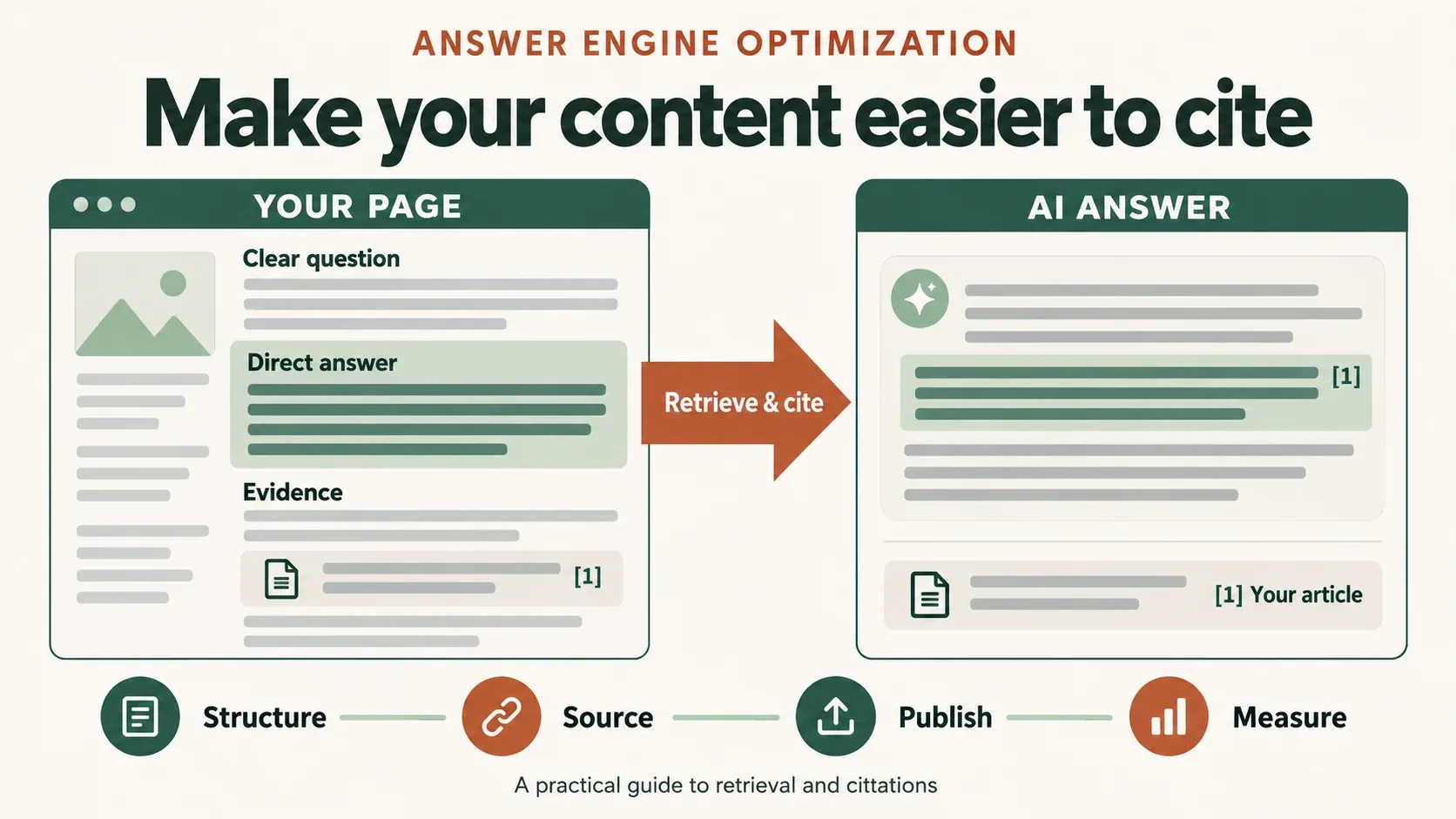
AI engine optimisation is often used to describe improvements that help answer systems find and interpret a website’s information. A technical review can establish whether the page is accessible and accurately described. It cannot establish that an engine will select, cite or recommend it.
Use the following checklist on one useful article before extending the work across a site. Keep a record of the URL, date, change and observed result so that technical verification does not become a claim of ranking improvement.
1. Verify the intended public page
Open the canonical URL without signing in. Confirm that it returns the intended article, that useful text is present in the rendered page and that important resources load. Check the actual robots directive and crawler access rules. A successful CMS response does not prove that a separately built website has updated.
If the URL moved, verify the old path’s permanent redirect and the final destination, including relevant trailing-slash variants. Avoid leaving an older linked article as a broken route while publishing a replacement under a new slug.
2. Check whether the page resolves a real question
Read the opening answer, then inspect the supporting explanation. Define the assumptions and specialist terms. Remove unsupported numerical claims and add primary sources where they establish a fact. Include an original example only when it is documented or clearly identified as illustrative.
The AEO content brief can help distinguish the main answer, evidence and limitations before editing begins.
3. Inspect titles, headings and links
The title, main heading and description should represent the same subject. Remove stale date promises when the content is not actually about that year. Keep a useful established URL unless there is a migration reason, and add redirects when changing it.
Follow every internal link in the article. Check that a link reaches the intended page and gives the reader a relevant next step. A link that works only in an editor preview has not passed the public-page check.
4. Match structured data to visible content
Inspect the article’s headline, institutional or individual author, publication date, meaningful revision date and representative image. The byline should lead to accurate information about the responsible author or organisation. Do not invent an expert identity to complete a field.
Use Google’s Article structured-data documentation when validating the markup. Passing a validator means the tested markup satisfies that validator; it does not guarantee a rich result or an AI citation.
5. Check the page on a narrow screen
Make sure the hero has dimensions, table content remains usable, links are selectable and the page is readable without waiting for decorative animation. Inspect the loaded image, not just its media-library thumbnail. Use laboratory performance checks to find regressions and field data where available to understand real visits.
6. Establish a repeatable observation record
Keep the prompt set, provider, market, date, response status, mentions and citations. Use the measurement method to separate missing observations from observed absences. Keep website visits and commercial conversion events in separate reports.
Google’s AI optimisation guide provides its current guidance for Search. Provider behaviour can differ, so do not generalise a single successful citation into a claim about every engine. The finished review should say what was checked, what passed and what remains unknown.